
Biometrics: Your Face is Your Password
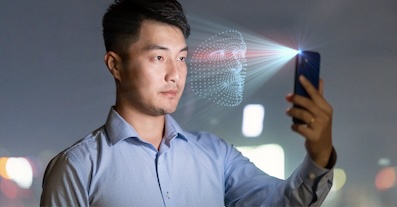
For decades, the password has been our gatekeeper. We’ve memorized codes, created endless variations with numbers and symbols, and reset them more times than we’d like to admit. But passwords come with weaknesses—they’re easy to forget and even easier to steal. Enter biometrics, specifically facial recognition, where your face becomes your password. It’s a modern solution designed to improve both convenience and security. Just as people turn to business debt relief to bring order to overwhelming financial obligations, businesses and individuals are turning to biometric authentication to bring simplicity and safety to digital access.
This shift represents more than a technological upgrade. It’s a change in how we view identity itself, blending biology with digital security in ways that were once only imagined in science fiction.
How Facial Biometrics Actually Works
Facial recognition technology begins with a simple image, usually captured by your device’s camera or a specialized sensor. But what happens next is more complex. The system analyzes unique facial features such as the distance between your eyes, the shape of your cheekbones, or the curve of your jawline. These measurements are then converted into a mathematical code known as a faceprint. The faceprint is compared against stored data, and if it matches, access is granted. This process happens almost instantly, making it both fast and seamless.
Why It’s Safer Than Passwords
Passwords can be guessed, hacked, or stolen. People often reuse them across multiple accounts, which creates more risk. In contrast, your face is unique and much harder to duplicate. While no system is perfect, facial biometrics reduces the likelihood of unauthorized access by relying on traits that can’t simply be written down or leaked in a data breach. In fact, advanced systems even detect whether a face is real and three-dimensional, helping prevent tricks like photos or masks.
Convenience Without Compromise
One of the most appealing aspects of using your face as a password is convenience. There’s no need to remember complex strings of characters or fumble with two-step verification codes. Unlocking your device, logging into an app, or completing a secure transaction takes only a glance. This ease of use makes people more likely to secure their accounts properly instead of cutting corners with weak passwords. Security, in this case, aligns with simplicity.
The Balance of Privacy and Security
As with any new technology, facial biometrics comes with concerns. Some worry about how their faceprint data is stored and who has access to it. If mishandled, biometric information could pose serious privacy risks. That’s why it’s important to use trusted systems that store biometric data securely, often directly on your device rather than in a central server. Transparency from companies about how the data is used and protected helps build confidence in this technology.
Beyond Unlocking Phones
Facial recognition isn’t limited to smartphones. It’s expanding into areas like banking, healthcare, and even airport security. Imagine boarding a flight without showing a passport because your face is enough to verify your identity. Or checking into a hospital where your medical records are instantly linked to your faceprint. These applications save time while maintaining high levels of security. The more integrated the technology becomes, the more it reshapes how we move through daily life.
Challenges and Limitations
Despite its advantages, facial biometrics is not flawless. Lighting conditions, camera quality, or even changes in appearance like glasses or facial hair can affect accuracy. Systems are constantly improving, but users should be aware of these limitations. There are also ethical debates about the use of facial recognition in public spaces, where it could be used for surveillance without consent. Balancing innovation with responsible use remains an ongoing conversation.
Why Adoption Will Continue to Grow
The push toward facial biometrics is driven by both practicality and necessity. As cyberattacks grow more sophisticated, traditional passwords no longer provide enough protection. Businesses and governments are seeking stronger, more user-friendly systems. For individuals, the appeal of not having to remember dozens of passwords is clear. As more devices and services adopt this technology, using your face as a password will likely become the norm rather than the exception.
The Future of Identity
Facial recognition is just one piece of the biometric puzzle. Fingerprints, voice recognition, and even behavioral patterns like typing rhythm are being used to strengthen authentication. But facial biometrics stands out because it combines security with speed and requires almost no effort from the user. It represents a future where identity is tied more closely to who we are rather than what we remember.
In the end, your face becoming your password isn’t about replacing one system with another—it’s about rethinking how we protect what matters most. By merging technology with human uniqueness, we create systems that are both secure and user-friendly. The key will be ensuring that as this technology grows, privacy and trust grow with it.