
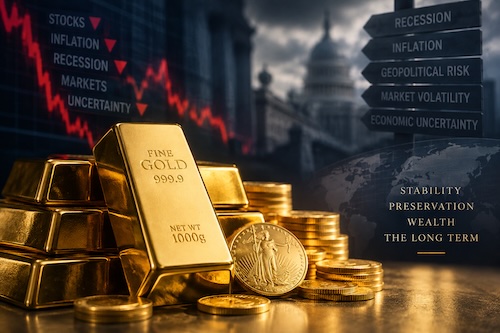
Why Investors Buy Gold During Periods of Economic Uncertainty
Economic uncertainty can make even experienced investors nervous. Stock prices may swing sharply, inflation can reduce buying power, and concerns about banks, interest rates, or global conflicts can quickly change the market’s mood.
During these periods, many investors start looking at gold.
Gold is not a magic investment that always rises when markets fall. Its price moves like other assets. Still, it has qualities that have made it a popular place to store part of a person’s wealth during uncertain times.
Gold Has Been Valuable for Generations
Gold was considered valuable long before modern stock markets existed.
For thousands of years, people have used gold for trade, savings, jewelry, and storing wealth. Currencies and governments have changed many times during that history, yet gold has continued to have value around the world.
That long record is one reason investors still pay attention to it when confidence in other assets starts to fall.
Physical gold also has a simple appeal. If you own a gold coin or bar, you own the actual metal. Its existence does not depend on a company’s earnings report or ability to repay its debt.
Investors Want Protection From Inflation
Inflation means the same amount of money buys fewer goods and services over time.
Imagine keeping $10,000 in cash for many years while prices continue rising. You still have $10,000, but its buying power may be much lower.
This is one reason some investors use gold as part of a long-term wealth protection plan.
Gold is a finite resource and cannot simply be created in the same way new currency can be created. When investors become worried about inflation or the future value of money, demand for physical gold may increase.
That does not mean gold will beat inflation every year. Short-term gold prices can move in either direction.
Gold Can Add Balance to a Portfolio
Putting all your money into one type of asset creates risk.
An investor might own stocks, bonds, cash, real estate, and a smaller amount of precious metals. Each part of the portfolio serves a different purpose.
Gold can provide another layer of diversification.
During periods when investors become worried about stocks or the economy, gold may behave differently from traditional financial assets. That can make it attractive to people who do not want their entire portfolio tied to the same market conditions.
Physical Gold Gives Investors Direct Ownership
There is an important difference between owning a physical gold bar and owning shares of a company.
A gold bar is a tangible asset.
Once purchased, it can be stored in a secure home safe, safe-deposit box, or professional vault. Investors do need to consider storage and insurance, but they gain direct control over the metal.
For people worried about financial system risk, direct ownership can be appealing.
Coins and Bars Give Buyers Different Options
Investors do not have to purchase huge amounts of gold at once.
Golden Eagle Coins offers physical gold in many forms, including American Gold Eagles, Canadian Gold Maple Leafs, South African Krugerrands, and gold bars.
Gold bars are available in sizes ranging from small gram bars to much larger bars. Bars also tend to carry lower premiums over the gold spot price than many comparable coins.
Coins provide another advantage: flexibility.
For example, American Gold Eagles are produced in 1 oz, 1/2 oz, 1/4 oz, and 1/10 oz sizes. An investor can build a position gradually rather than make a single large purchase.
Smaller pieces may also make it easier to sell only part of a gold holding later.
Gold Is Not Free From Risk
Buying gold during uncertain times does not guarantee a profit.
Gold prices can decline. Physical buyers also need to consider dealer premiums, storage, insurance, and the difference between buying and selling prices.
Gold also does not produce interest or dividends simply because you own it.
This is why many investors treat gold as one part of a broader portfolio instead of putting all their savings into precious metals.
Why Gold Still Gets Attention When the Economy Looks Shaky
Economic uncertainty creates one big problem for investors: nobody knows exactly what happens next.
Stocks could recover. Inflation could cool. Interest rates could change. A recession could arrive or be avoided entirely.
Gold gives investors another place to keep part of their wealth without depending completely on stocks, bonds, or cash.
Its long history, limited supply, global recognition, and physical ownership help explain why investors continue buying gold when confidence in the economy starts to weaken.
Gold cannot remove uncertainty, but for many investors, it can make dealing with that uncertainty a little easier.