Auditor Ball’s Examination of Children Sleeping in CHFS Office Buildings Reveals System Rife with Abuse, Vulnerability to Sex Trafficking, and More
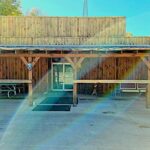
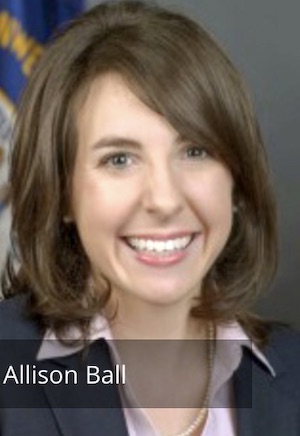
FRANKFORT, KY (March 9, 2026)—Today, Auditor Allison Ball and Ombudsman Jonathan Grate released an Examination of Children Sleeping in Cabinet for Health and Family Services (CHFS) Office Buildings and Other Nontraditional Placement Settings (including hotels and state parks).
“The findings of this examination are heartbreaking and it’s clear that CHFS is failing foster children across Kentucky,” Auditor Ball said. “Housing children in office buildings, hotels, and state parks is a terrible and dangerous non-solution to a problem that is solvable. This is causing significant harm to many of Kentucky’s children.”
The examination covered a 22-month review period in which 304 children were placed in nontraditional placement settings like CHFS office buildings, state parks, or other unlicensed settings. The examination’s findings indicate the system of nontraditional placements overseen by CHFS is rife with conditions enabling runaways, physical abuse while in care, vulnerability to sex trafficking, and other forms of mistreatment and neglect.
Examples include:
- 17 children were six years of age and under and four of these children were infants under the age of one.
- The population of children in nontraditional placements ranges from those without prior placements or serious diagnoses to those needing extensive supervision and medical care.
- 83 children with suicidal thoughts and behaviors were housed in office buildings without documented psychiatric care, suicide-safe design, or trained clinical supervision. Children with suicidal ideation were placed in nontraditional settings for an average cumulative stay of longer than one week; this is longer than the average stay of children without noted increased risks of suicide.
- Despite many of the children having medical and mental health issues, CHFS’s documentation of care provided was so lacking that in 247 (81.2%) cases, medical care, medication management, continuation of therapy, and school attendance were not readily apparent for the period when the child was housed in a nontraditional setting.
- Nearly 40% of 12-17 years olds in nontraditional placements have exhibited behaviors indicating a likelihood for running away. Among children with documented runaway histories, 89 were placed in CHFS office buildings and approximately 10 were placed in hotels. These settings lack controlled access points, perimeter security, or design features intended to prevent unauthorized exit.
- One child fled her placement and was located fifty-one days later living in a tent with a middle-aged man wanted for murder.
- One child was physically assaulted by a provider.
- One child reported she was the victim of sex trafficking that occurred after she fled her placement.
- One child, in contradiction to her faith, was given a Ouija Board to play with by a social worker.
- At least two children were placed for long periods of time in out-of-state facilities with documented investigations and allegations of neglect, sexual misconduct by staff against residents, and the use of chemical injections as restraints, among other issues.
- Many children were housed in facilities without showers or other necessary living accommodations. Some buildings were not zoned for residential use and it was not readily apparent that local fire departments were notified that people were residing in the office buildings.
Despite this issue persisting for four years and a continued public commitment by CHFS leadership to find a solution, CHFS has failed to meaningfully address the problem. Per KRS 43.090(3), CHFS must submit written responses to the Ombudsman addressing the findings by March 24, 2026. Then, within 60 days, CHFS shall notify the Ombudsman of which recommendations have and have not been implemented and its reason or failure therein to do so.